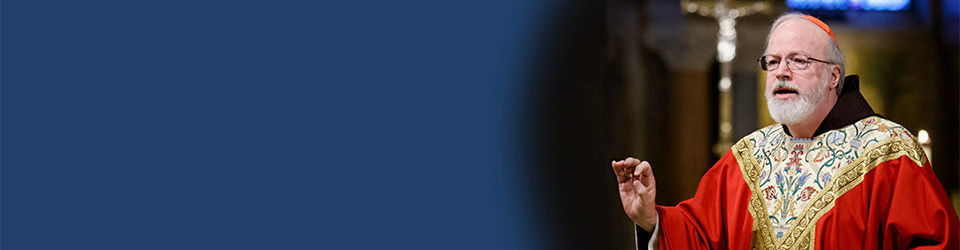
Hello and welcome!
As we prepare for the start of Lent later this month, I am happy to share with you some of the events and experiences that have filled my month of January.
From January 6 to 9, I was in Rome, as Pope Leo XIV called his first extraordinary consistory. It may have been the largest consistory ever. I think there were like 160 cardinals there, which was very impressive.

We began with Mass in the San Sebastiano Chapel. Then, the initial session was in the Synod Hall, which is upstairs in the Paul VI audience building.

Then there were sessions of discussion among the cardinals, where we used the main audience hall.

We were in different linguistic groups, and there were a number of themes that were talked about: Praedicate Evangelium and the reform of the Curia, the relationship between the Curia and the bishops’ conferences, the whole notion of synodality, and the question of liturgy. And of course, there were opportunities for informal conversation.
It was a wonderful experience, and all the cardinals were delighted to be a part of it. We were very pleased that the Holy Father announced that he would have another one of these extraordinary synods before the feast of Saints Peter and Paul in June.
As I usually do, while at the Vatican, I stayed at the Casa Santa Marta, where I noticed this picture. 
It is in the basement where the coffee machine is. I must have walked by it a thousand times and never paid it any attention. But this last time I went by, it was sort of like the conversion of St. Teresa of Avila when she saw the Ecce Homo. I said, “Oh my gads, that’s Martha and Mary!” Of course, in the Casa Santa Marta, why wouldn’t you have Marta?
Just before the consistory, we also held a meeting of some of the cardinals at the Campo Santo Teutonico (the Teutonic Cemetery), which has been there for centuries. Pope Leo III gave the land to the Holy Roman Emperor Charlemagne back in 799 to serve as a hospice for German pilgrims.

The cemetery is located where the Circus of Nero once stood, and it was the site of the martyrdom of so many of the early Christians of Rome. In fact, the cemetery chapel marks the very spot where St. Peter was killed.
Today, a seminary stands where the old hospice used to be, receiving priests from Germany and Austria who come to Rome for their studies. As you look through the cemetery, you see the graves of many notable figures, including Sister Pascalina Lehnert, the famous housekeeper of Pope Pius XII. They also have some wonderful exhibits there about Pope Benedict XVI, which is very fitting as he was the first German pope in about 1,000 years when he was elected.


In this photo, you can see St. Peter’s Basilica just behind the cemetery walls, and the yellow/ orange building to the side is the German seminary.

Of course, being there at the beginning of January, it was nice to be able to see the Vatican Christmas decorations still up. The Christmas tree was just spectacular, and this year’s crèche was very impressive.

The theme was from the beautiful Italian Christmas carol “Tu scendi dalle stelle” (“You Come Down from the Stars”) written by St. Alphonsus Liguori. And in the crèche scene, they have St. Alphonsus to the side in his bishop’s robes, composing the carol.


During my time in Rome, I was also able to visit with some of my Capuchin brothers, including Brother Robert and Brother Diogo, who are in the Capuchin Curia.

And I also met up with my good friend Cardinal Adalberto Martínez.

From January 12 to 16, I traveled to the Bethany Center in Lutz, Florida, for the retreat for Episcopal Region III, which comprises the bishops of Pennsylvania and New Jersey. This is the same retreat house where Bishop Hennessy always takes the diocesan priests from Boston every year.


There were about 25 bishops, including several Eastern Rite bishops. In that part of the country, there are many Eastern Rite Catholics: Pittsburgh is an archdiocese for the Byzantine Catholics, and Philadelphia is an archdiocese for the Ukrainian Catholics. So, we had Mass one day in the Eastern Rite Liturgy, the Liturgy of St. John Chrysostom. It was a wonderful group.

The weather was very nice until the last night, when it went down to 32 degrees! The rest of the time, it was about 60. I was feeling sorry for those poor alligators.

I told the bishops I was worried about them, and I was going to invite them into my room! I’m not sure what alligators do in the cold, but at least they won’t fall from a tree on you like an iguana. We never had that problem in the Virgin Islands because it never got that cold, but in Florida, you can be hit by a falling iguana!
On January 21, I attended an event at Georgetown University titled “50 Years Connecting Catholic Social Thought and Public Life: Lessons from John Carr’s Leadership.”

John Carr worked in the peace and justice office of the USCCB for 20 years, and before that, he worked for Cardinal Hickey when I worked for the cardinal in the Archdiocese of Washington. Of late, he had been running that institute at Georgetown from which he retired at the end of the year, and now it is being run by Kim Daniels.

They had a panel discussion featuring several distinguished speakers, including David Brooks from the New York Times. He was fascinating, and it was an interesting evening.

One day, while driving through the city, I also happened to pass the Kenesaw apartment building, which brought back many memories of my time living and working in Washington.

The following evening, January 22, I attended the opening Mass of the annual National Prayer Vigil for Life at the Basilica of the National Shrine of the Immaculate Conception. As always, it was standing room only.
We were all very surprised that Bishop Daniel Thomas didn’t have the Mass because he’s the chairman of the USCCB Pro-Life Committee. But, apparently, he was unable to come due to some medical reasons, so he asked Bishop James Conley of Lincoln, Nebraska, to do it in his stead. He gave a beautiful homily; I thought it was splendid.

As always, the Mass was standing-room only, and while we didn’t have the same number of bishops as in the past, it was still a very good group.

The concelebrants included Cardinal Robert McElroy, Cardinal Christophe Pierre, and myself. Cardinal Pierre read a beautiful message from Pope Leo XIV, expressing his “heartfelt appreciation” to the participants for their “eloquent public witness.”
On the morning of January 23, they asked me to do Mass to conclude the vigil, and, once again, we had a full basilica.

In my homily, I told the people that if we aspire to overcome abortion in our world, we must commit ourselves to helping mothers, especially those with a difficult pregnancy and challenging circumstances, with programs such as Walking with Moms in Need and Project Rachel. I told them that Jesus Christ came into the world as a baby so that we might have life and have it abundantly. That life in abundance is sustained by grace and that the antidote to abortion is love, compassion and solidarity.
After Mass, I went down to the March. Of course, it was good to see many familiar faces, including Archbishop Bill Lori and the Supreme Knight Patrick Kelly.


It’s a bit like being in Rome. You can’t go to Rome or the March for Life without running into people you know from all over the world.
I have been to every March for Life since the first one in 1974, and I was happy I was able to be there again this year. I was also happy to see so many of our younger generations of Catholics participating.

As I always like to say, the March for Life in Washington is the “poor man’s World Youth Day.” It’s a wonderful opportunity for our young people to experience the faith and enthusiasm of thousands and thousands of their peers. Especially for those in public schools or other places where their faith might be belittled or ridiculed, it’s very affirming to be part of an assembly like the March for Life.

I know some people wonder why the March for Life still takes place in Washington each year, even after the overturning of Roe v. Wade, but I think it is one of the most important events to keep the theme before the eyes of the nation. The fact that the President and the Vice President would participate, and people on Capitol Hill are aware of it, is very important.
Of course, like much of the eastern half of the country, Washington was hit by a tremendous snowstorm in the days after the March, causing several events to be cancelled. But by January 31, I was able to travel to New York for an event for the Tallaj Foundation, run by SOMOS. I was pleased to attend with Bishop Octavio Cisneros and Mario Paredes, two very close friends of mine.

A friend of mine, Dr. Ramon Tallaj, is from Santo Domingo and was brought to New York by Cardinal O’Connor to work in healthcare for the archdiocese and eventually began SOMOS, which is a conglomerate of about 2,000 doctors who work with low-income families in the New York metropolitan area.
He has started a foundation to give scholarships for young men and women who want to study medicine, nursing, or other health-related professions. They are supporting about 70 young people right now in the New York area and Santo Domingo. The occasion for the celebration was Dr. Tallaj’s 70th birthday. And it reminded me how every birthday I had in Boston was used as an excuse for a fundraiser. So, I was happy it was somebody else’s this time!
Of course, we were all very concerned earlier this week when it looked like many of our Haitian brothers and sisters would be losing their Temporary Protected Status (TPS). While we are very pleased that this seems to have been paused for the time being, it is likely an issue that will come up again in the coming weeks or months.
Recently, Msgr. Bryan Hehir wrote a very eloquent piece in The Pilot explaining the importance of preserving TPS for Haitian immigrants, and I’d like to share it with you here:
Immigration today is a pervasive fact of life for states, countries, and their societies. This fact creates a political, legal, and moral challenge which must be addressed. In a distinctive way immigration creates a challenge for the Church in our country. It is a challenge we have the resources and the track record to address. Catholicism in the United States is tied to immigration because of our teaching, our history, and our institutions.
From the Sermon on the Mount to contemporary Catholic Social Teaching, we are instructed to welcome the stranger and to serve the vulnerable in our societies. Historically, we have been an immigrant Church reaching back since the 19th century. Socially, we have created the institutions where immigrants from multiple countries and cultures have found first a community of faith and worship, and then have found schools, social services and deep human ties.
Today, our Church and our country are being tested not only by the needs of immigrants, but by a national debate that is too often disparaging of their presence among us and divisive in our political system. To meet the test we face, we have been inspired by the continuing concern and messages of Pope Leo XIV. During his first year as the successor of St. Peter, the Holy Father has returned often to the suffering of immigrants, and, at times, to their situation in the United States. After the U.S. Bishops issued their “Special Message” on immigration from their annual meeting in November 2025, the Holy Father expressed his appreciation and support: “I would like to invite all Catholics — and also people of good will — to listen carefully to what they have said. I believe we must seek ways of treating people with humanity, with the dignity that is theirs.”
In their “Special Message,” the bishops voiced their pastoral concern about the suffering of immigrants: “We are disturbed when we see among our people a climate of fear and anxiety around questions of profiling and immigration enforcement. We are saddened by the state of contemporary debate and vilification of immigrants. We are concerned about the conditions in detention centers and the lack of pastoral care.”
In response to the climate of fear they have observed, the U.S. Bishops went on to oppose “the indiscriminate mass deportation of people,” as well as to pledge and promise: “we stand with you in your suffering, since when one member suffers, all suffer.” (I Cor. 12:26)
In the face of constantly changing federal policies toward immigrants, one immediate problem we all face is the removal of “Temporary Protected Status” (TPS) for the Haitian community in the United States.What is “Protected Temporary Status?” It is a procedure granted by the Secretary of Homeland Security to persons already in the United States who are nationals of a country experiencing armed conflict, environmental disaster or other situations that make it difficult or impossible for them to return safely to their country. For those who qualify for TPS, the significance of this status is that it allows the recipient to remain in the United States and possibly to obtain work authorization for a designated time. TPS grants eligible recipients the ability to remain in the United States, but it is not equivalent to lawful admission to the United States.
Under existing policy, the Secretary of Homeland Security designates which citizens of countries qualify for TPS, and the Secretary can and does remove the protection granted by the procedure. It is the Secretary who must renew the status when necessary. The removal of TPS can be devastating to individuals and their families. Boston is the city with the third-largest Haitian population in the United States. The Secretary of Homeland Security has designated Feb. 3, 2026, as the date to terminate TPS for Haitians.
For those affected, the very fabric of their lives will be fundamentally changed. Moreover, the consequences of the removal of TPS will be felt immediately in the wider society precisely because Haitians are woven into the general life of our country.
While TPS is designed to provide a certain stability in the lives of immigrants who are not citizens, the constantly changing implementation of the program seriously erodes or eliminates the humane purpose this status could fulfill. The fact that TPS depends upon Executive Orders in any administration is itself a problem. Congressional action could enhance the status and stability of TPS, but so far, it has not been adequately addressed in legislation.In his message of support for the U.S. Bishops, Pope Leo XIV reminded the world that immigrant enforcement must treat people with the dignity they possess. In Catholic teaching, that dignity is the basis of the human rights we all share. Respecting the unique dignity of each person and recognizing the moral demands of rights which flow from dignity for each person are prior principles to recognize before the necessary legal status of persons is determined in any society.
Many of the Haitian individuals and families now threatened with disruption are members of the Catholic community of the Archdiocese of Boston. In their name, the Catholic Church finds it imperative to oppose the imminent threat now facing individuals and families whom we know and serve through our pastoral care. In their name, the Church is called upon to seek relief and redress from the dangers now hanging over their heads.
The original reason Haitians were granted TPS was the chaotic, violent context that has prevailed in Haiti for years. That context has not changed. The original rationale for TPS by any standard still applies. Human decency is one reason to stand against removing basic protection from our neighbors and parishioners. Beyond decency, charity and a sense of social justice are reasons to speak for and stand with Haitians in the United States at this time. This nation’s record on immigration is not perfect, but we have protected large numbers in the past, and we have the capacity to do so again.
The Haitian immigrants who now hold Temporary Protected Status entered the United States in good faith and received their status from the U.S. Government. To strip away that status with too little notice and while the need for refuge continues does an injustice to our vulnerable neighbors here in Boston and its surrounding communities. In accord with Catholic moral teaching, we respectfully ask the U.S. Government to extend this protected status for so many of our Haitian residents. And we wish to assure our neighbors that they are not alone and that we desire to stand with them in this moment of need.
The Church lives within and is grateful for the American legal system. Functioning within that legal system, we seek to provide the spiritual, sacramental, and social assistance Haitians now need. The danger to others is clear, so should our witness be clear. To the best of our ability, we seek to speak for and stand with the Haitian community. For them, we seek to provide hope. For them, our prayers will continue. For them, our advocacy will be sustained.
Finally, I want to say how saddened I was by the news of the death of John Allen.
John was from a little town in Kansas called Hays, where there’s a big Capuchin parish and most of the people are Volga Germans, many of them wheat farmers. John was a member of the Capuchin parish there and went to St. Thomas More High School, which the Capuchins run. He, of course, grew up to be a famous Vaticanista.

Eventually, he started Crux in conjunction with the Boston Globe, and after two years, it became independent and Rome-based. He had an interesting career as a journalist, always providing deep insights into the life of the Church. Among his many books were two on Pope Benedict and a very interesting book on Opus Dei. He had been struggling with cancer for many years and finally passed away on January 22. They had the funeral at the Opus Dei church in Rome.
I was able to speak to his wife, Elise, and he will always be fondly remembered as a good friend. We pray for the repose of his soul.
Until next time,
Cardinal Seán