Hello and welcome!
My month of June began with the funeral Mass for Bishop John Ricard.

Bishop Ricard was a Josephite priest, and we coincided in Washington together. When I was a priest working with the Hispanics, he was a priest working with Afro-American ministries for the archdiocese, and we were made bishops at the same time in 1984. I went to the Virgin Islands, and he went to Baltimore as an auxiliary. From there, he went to Pensacola-Tallahassee.
While he was there, he had a stroke, and so he resigned the diocese. He was eventually able to overcome a lot of the effects of the stroke, returned to Washington and lived with the Josephite community, where he was elected their Superior General.
He made great contributions to the bishops’ conference in Washington. He very much focused on our need to have an active relationship with the Church in Africa, and was really the one responsible for setting up the Committee on Africa and the annual collection for Africa.
Cardinal Wilton Gregory presided and preached at the Mass, but there were many Black bishops and clergy who assembled at his old parish, where John had been the pastor before becoming a bishop. He was a great bishop, and I was happy to be able to be there for the funeral. As I said, we had been together in Washington from the 1960s until 1984, so I knew him very well.
On June 2nd, I was invited to a celebration at the Italian Embassy in Washington marking the 80th anniversary of the founding of the Republic of Italy.
Dr. Bruno Damiani, who had been one of my professors at Catholic University and directed my dissertation, invited me to join him.
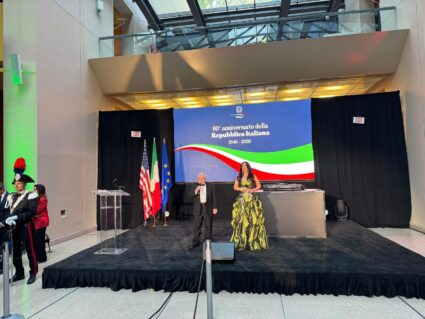
The embassy is huge, and they have a large gathering room where they had a number of exhibits. They also had some Italian opera singers performing, among other things, “Nessun Dorma” from “Turandot,” which I like very much.
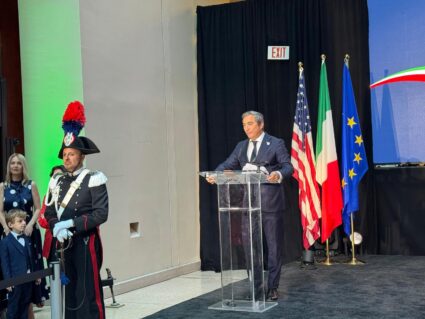
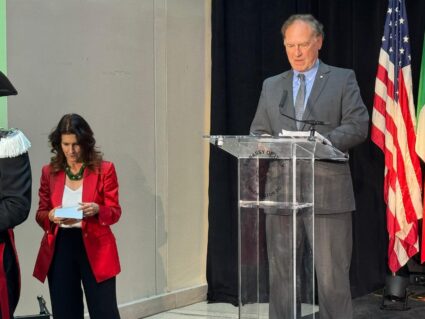
Ambassador Marco Peronaci gave a very beautiful speech, and then they invited Justice Alito to give a talk. They also had a video of Italy’s foreign minister, Antonio Tajani, who gave a very beautiful talk in which he quoted Pope Leo. I was happy to see that.
And, of course, it wouldn’t be an Italian celebration without food — I don’t think I’ve ever seen that much food in any embassy in my life!
It was a wonderful celebration, and an opportunity to see a lot of people whom I had known, including the former Paraguayan Foreign Minister, Eladio Loizaga.
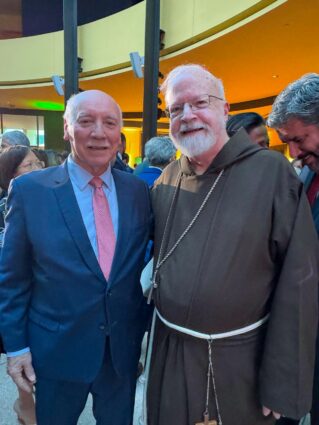
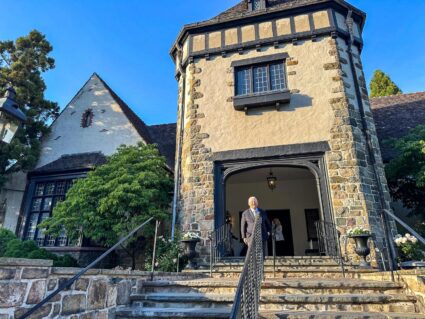
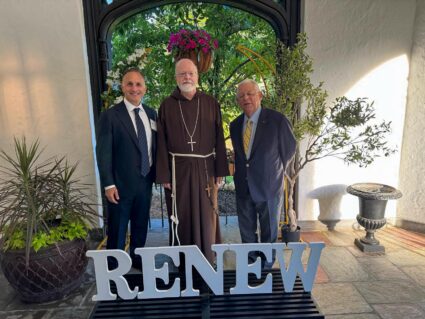
On June 4th, I attended the annual gala for RENEW International in West Orange, New Jersey, where they honored me with an award.
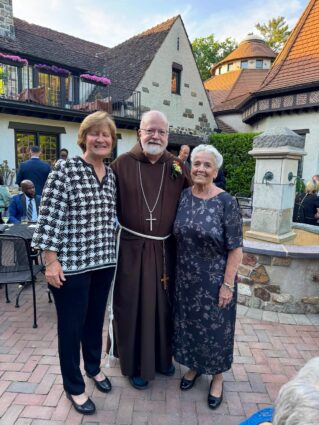
We were there with Cardinal Joseph Tobin, and we were joined by Sisters Honora Nolty, Terry Rickard and Maureen Colleary, who worked with us so much here in Boston.
RENEW in Boston had over 30,000 people participating in it, supported by roughly 3,000 trained parish lay leaders. At its peak, our three-year parish program, “ARISE: Together in Christ,” which we launched as the centerpiece of our bicentennial, was implemented in 180 parishes across the archdiocese. They also started ministry in the prisons, and they had different groups with many different ethnic communities that they were able to activate in the archdiocese. After ARISE, we continued working with RENEW to launch “Why Catholic? Journey through the Catechism,” for Lent in 2012.
The program was organized around small faith-sharing communities of about 10 people meeting weekly. Out of those parish groups came various social justice initiatives, such as purchasing Bibles for prison ministries, sending livestock to African villages, donating toiletries to veterans, and shipping religious items to Haiti. It was a very good program for us at a time when there were a lot of challenges, and it helped people really to have a sense of community, deepen their faith, enliven Sunday liturgies, and take more responsibility for the mission of the Church. It also helped build unity in our multicultural parishes and welcomed inactive or lapsed Catholics back into parish life. So, I was very grateful to them for all their contributions to the archdiocese and was very happy to be honored by them.
On June 6th, we had the ordination in Pittsburgh of three of our Capuchin brothers: Brothers Luke Kim, Stephen Cantwell and Ryan Schmeltzer. Regular readers will remember that last month I had the ordination for Capuchin friars in Texas and New Jersey, and now this was my own province.
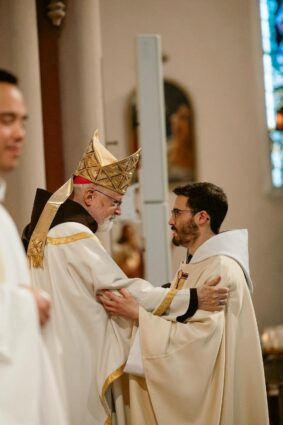
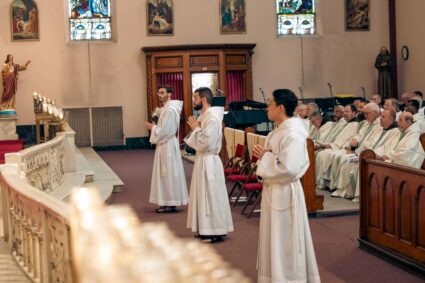
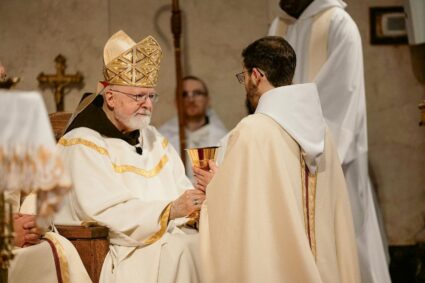
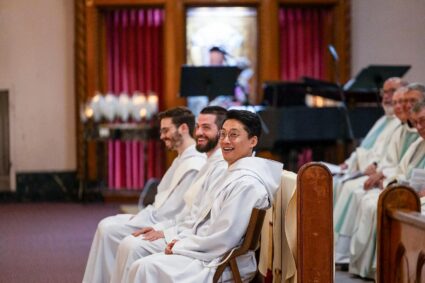
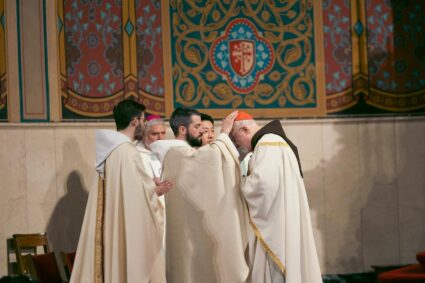
It was, of course, in the church at our motherhouse, St. Augustine Parish, where I was ordained and professed. It’s a parish we’ve had for 150 years, and so many of our significant ceremonies, funerals, professions, and ordinations all take place right there. So, it was wonderful to celebrate these ordinations there.
On June 9th was the dedication of the Jack Connors Memorial in Downtown Boston. Joe Nolan was sort of the inspiration behind this and brought together a group that raised money to put up a statue on Clarendon Street, right across from where Jack had his headquarters for so many years.
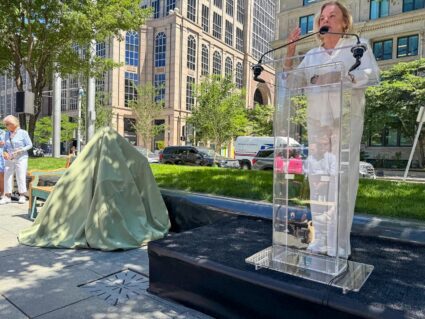
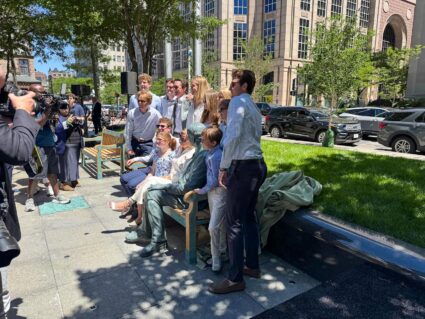
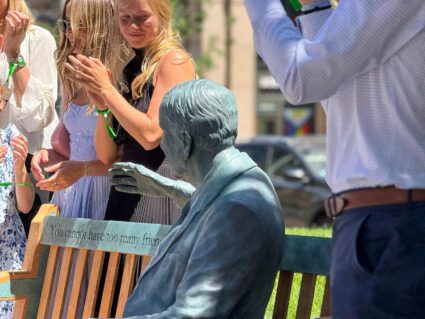
Of course, Jack was a man who supported so many different charities and nonprofits, so there was a huge turnout of people there. The Governor and the Mayor both spoke.
The artist who made the statue is Pablo Eduardo, a Bolivian sculptor whom I’ve known since he was a little child. His father worked for me at the Centro Católico and was the first editor of our Spanish newspaper, El Pregonero.
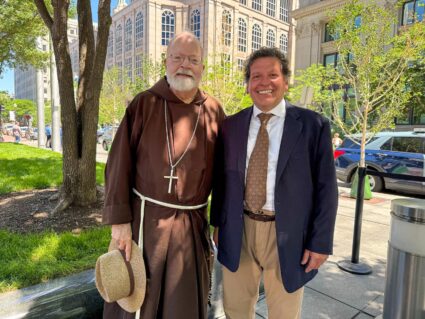
Pablo has a number of works in the Boston area, such as the statues of St. Ignatius and St. Thomas More at Boston College, the Boston Marathon Memorial and the statue of Kevin White at Faneuil Hall. He’s also done some of our churches’ tabernacles, statues, and crucifixes.
Then, the wake for Father Bill Kelly’s mother was on June 17th. Father Bill Kelly is from a large family, and I think all of the boys in the family were students at the Choir School. The whole family is very, very close-knit and very musically inclined. I was happy to be able to be there at least to express my condolences and assurances of prayers.
Bishop John Barres visited on June 19th and spent a couple of days with us. It’s always good to see him.
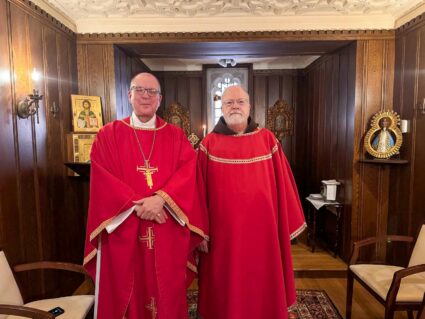
June 19th was also Jim McNamee’s funeral at St. Mary’s in Dartmouth, and I celebrated the Mass. 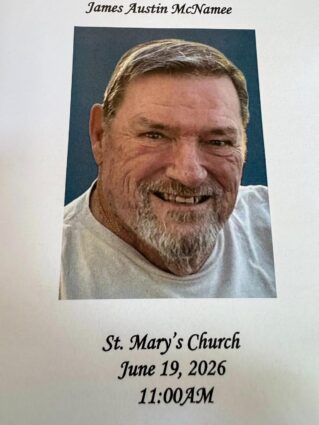
Jim had been the superintendent of Catholic schools in the Diocese of Fall River, and he taught at Bishop Stang High School, also. His wife, Arlene, was the head of Catholic Charities and did so much to develop Catholic Charities in Fall River.
June 21st was Father Nicanor’s final Mass at the cathedral, and we had a birthday party for him. We wished him well as he begins his new ministry as pastor in Roxbury.
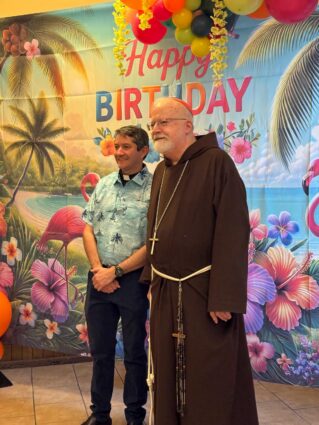
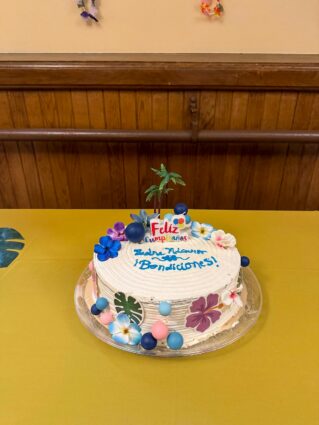
I should also mention that this month we welcomed a new rector at the cathedral, Father Chris O’Connor. It’s another “Father O” as pastor here, so we don’t have to change the monograms! Also, we were happy to welcome Father Rodrigo Martinez, who has come as parochial vicar and is working in the parish in a special way in Hispanic ministry here.
On June 24th, I went to Rome for the consistory called by the Holy Father. This was not an “ordinary consistory” to name new cardinals, but an “extraordinary consistory” to have an opportunity for the cardinals to dialogue with one another and with the Holy Father.
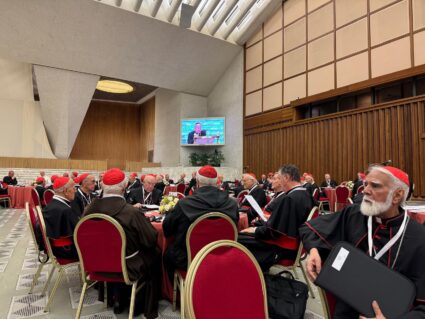
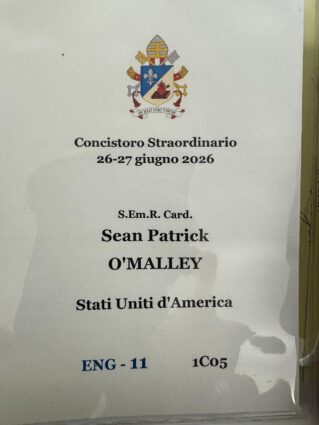
One of the things that the Holy Father put before us was the implementation of the synodal process, and then also looking at his encyclical Magnifica Humanitas. It also opened a lot of discussion in the whole area of peace and the Church’s just war theory. It was a fascinating consistory, and there was a lot of opportunity for conversations with the Holy Father.
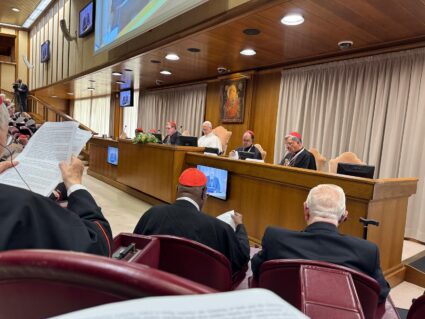
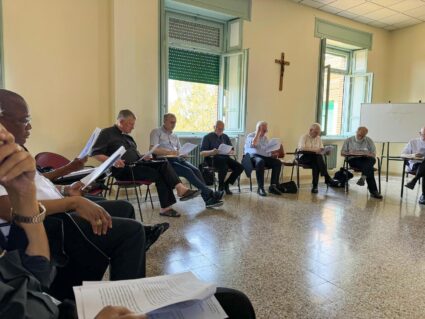
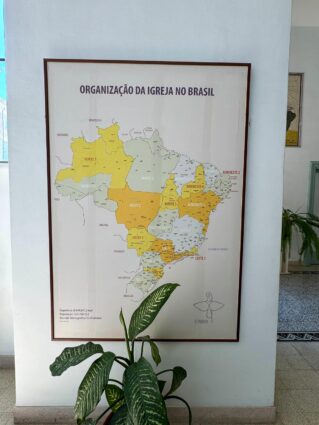
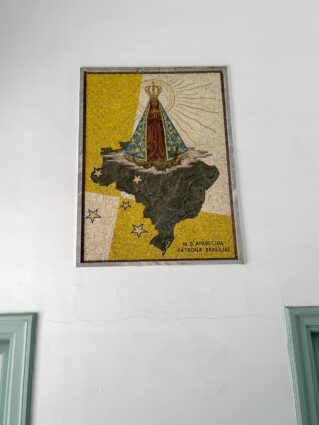
We opened with the Mass in St. Peter’s, and then the meetings were Friday and Saturday. Sunday the 28th was sort of a free day in which cardinals could go to their titular churches and say Mass. But I had been invited by Cardinal Jaime Spengler to a meeting with bishops that he had assembled from around the world to talk about Praedicate Evangelium and the implementation of Laudato Si’ in Latin America. That was held at the Pontificio Colégio Pio Brasileiro, a huge complex where about 100 Brazilian priests study.
The following day was the 29th, on which the Holy Father had the Mass of Sts. Peter and Paul. And mercifully, it was inside, because the temperature was like 100 degrees every day.
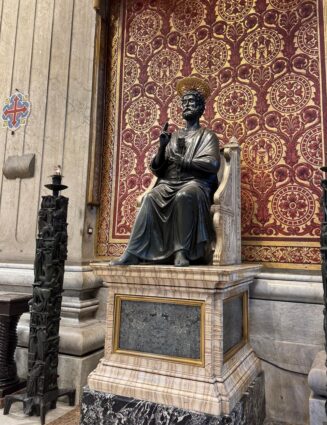
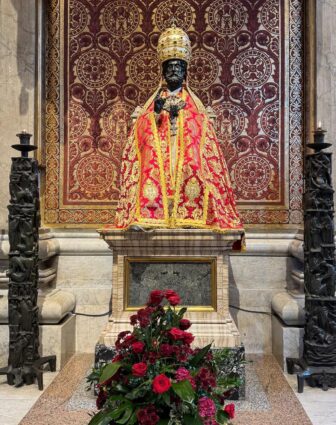
The famous statue of St. Peter was dressed with the festive papal tiara and red cope that they use on the feast of St. Peter. The statue is very famous because of centuries of pilgrims kissing the foot that has become worn away.
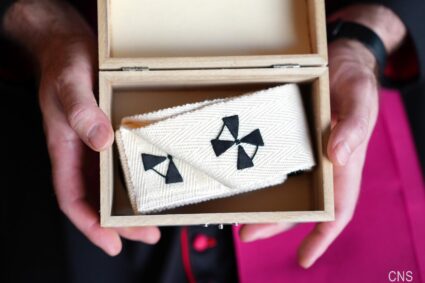
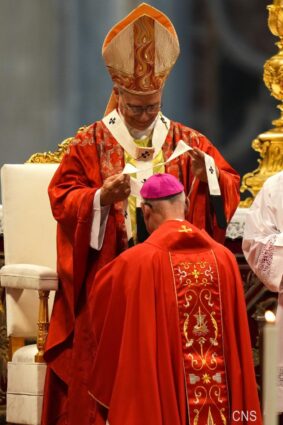
At the Mass, the Holy Father distributed the palliums. The pallium is a white woolen band that the archbishop wears in his own province, and it represents the lamb being carried on the shoulders of the Good Shepherd.
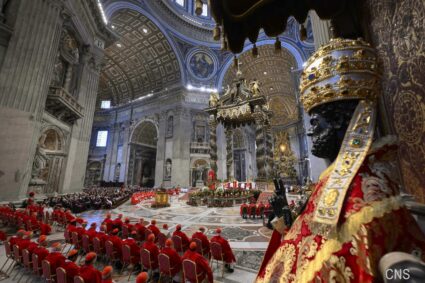
Those palliums, which are the symbols of the office of archbishop, are kept on St. Peter’s tomb, and on the feast of St. Peter, the Holy Father himself puts them on each of the new archbishops. From the States, we had four new archbishops who received the pallium: from Mobile, Denver, New York, and New Orleans.
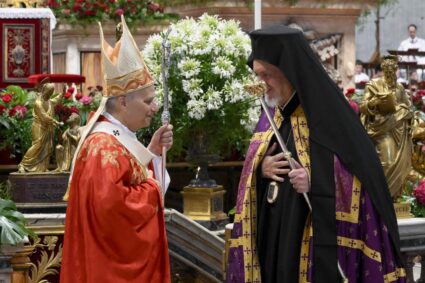
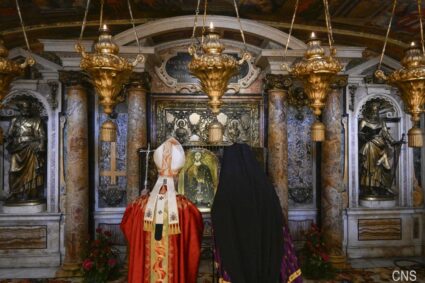
At the Mass, either the Ecumenical Patriarch of Constantinople comes or he sends a representative. This year, he sent the Metropolitan of Chalcedon, Emmanuel Adamakis, who represented him there. At the end of Mass, the Metropolitan of Chalcedon and the Holy Father went down in the confessio to pray before the tomb of St. Peter, which is always a very beautiful gesture. On the feast of St. Andrew, who was Peter’s brother and the patron of Constantinople, the Holy Father always sends a representative there to be with the Ecumenical Patriarch.
When he was processing out of the basilica, the Holy Father did something I don’t remember other popes doing. He went over to pray in front of the statue of St. Peter, and he actually kissed the foot of St. Peter. I was kind of moved by that because it’s such an act of popular religiosity. It’s what you see pilgrims to the basilica do, and he did it—it was a touching gesture, I thought.
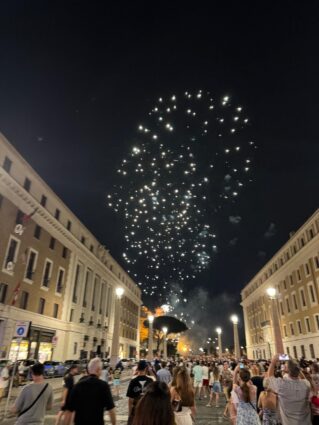
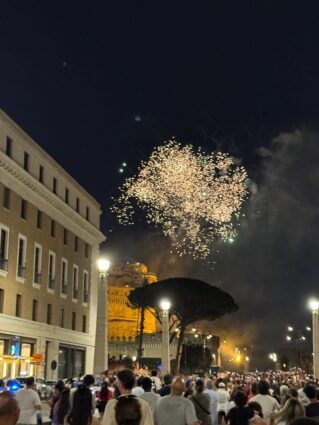
That night was the annual fireworks at the Castel Sant’Angelo. I always joke that they do them for my birthday, and that’s why I like to be in Rome on the 29th. (I mean, I told them they shouldn’t have. It’s just too much!) But it was beautiful.
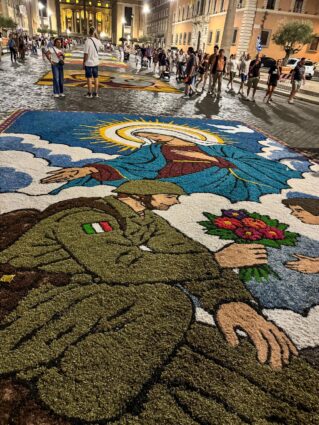
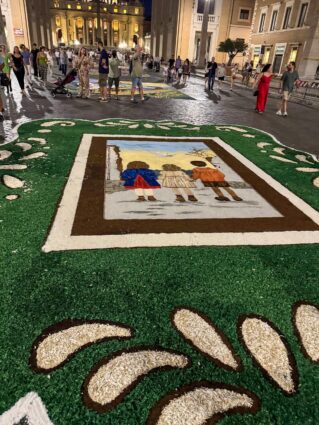
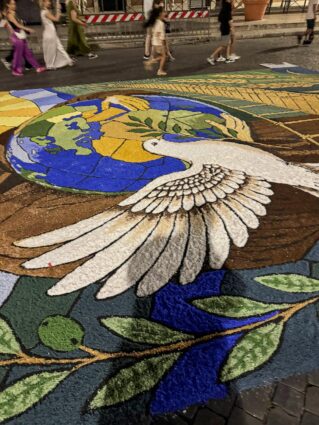
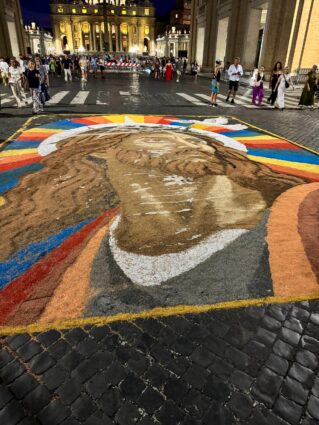
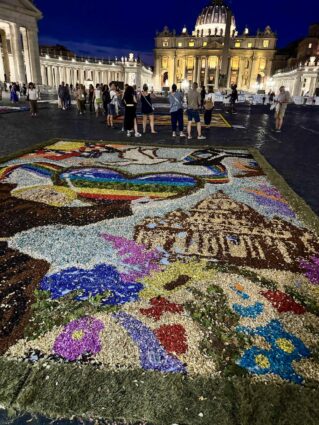
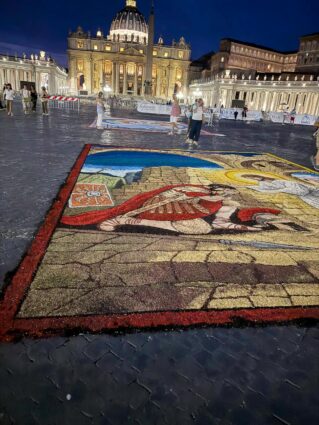
They also have these beautiful carpets that they make with different designs along the street in front of St. Peter’s in the Via della Conciliazione, using sawdust.
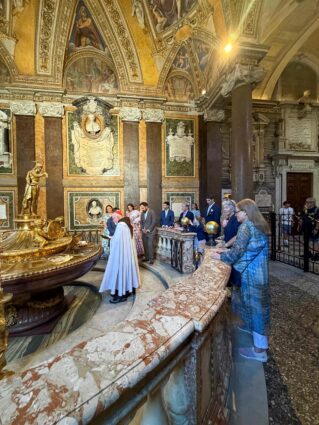
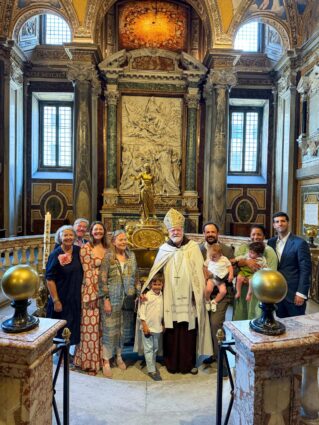
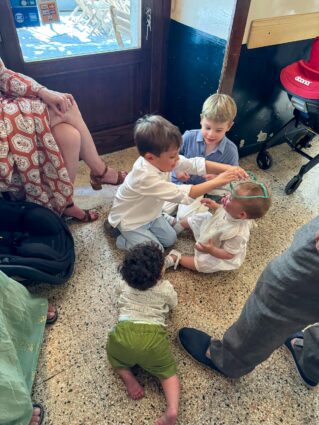
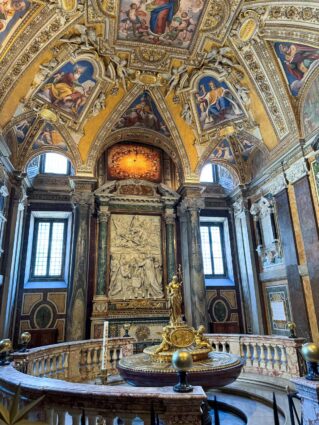
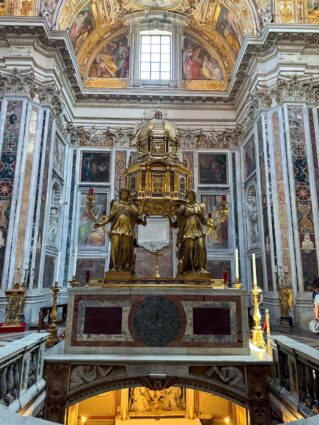
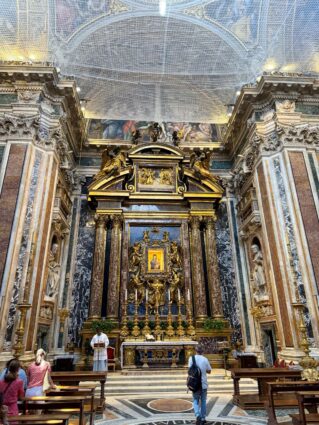
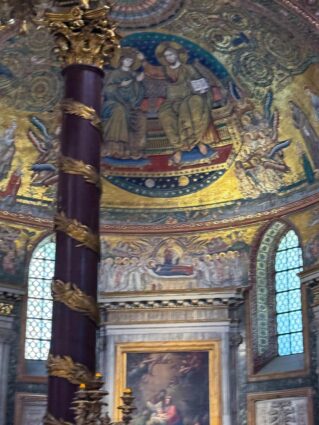
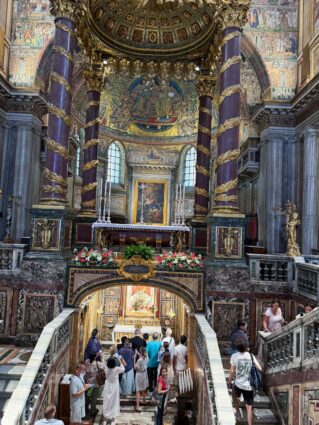
Then on July 1st, I had the baptism of my little great-grandnephew, Hugo, in the baptistry at St. Mary Major. It was a beautiful ceremony, and they have a lovely baptismal font.
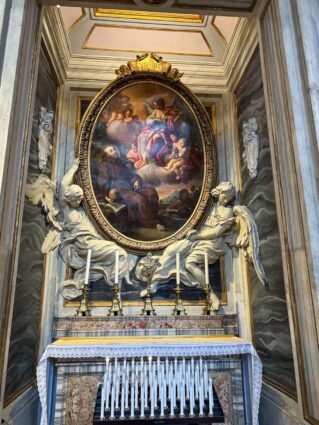
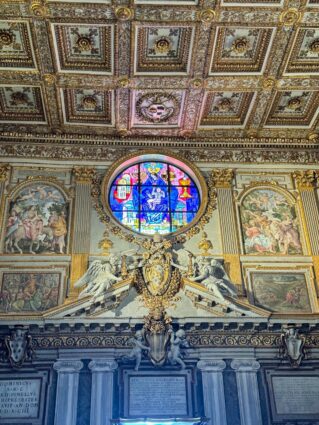
St. Mary Major always been my favorite basilica. It is famous for the relics of Christ’s manger brought from the Holy Land, and the famous Salus Populi Romani icon of the Blessed Mother, the patroness of Rome, which is attributed to St. Luke the Evangelist. Pope Francis would always go to pray before that icon every time he went on a journey or came back from a journey. And so, as he embarked on his journey for eternal life, that’s where he asked to be buried.
Rome is sort of the crossroads of the Catholic world. You always meet so many people from everywhere there, and it’s a wonderful place for friends to greet each other and see each other again. We have the famous adage in English that “All roads lead to Rome,” and that certainly holds true in the Catholic world.
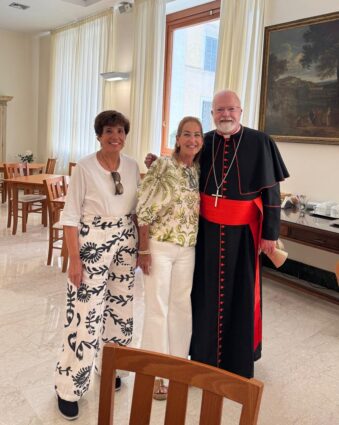
While I was in Rome at the Casa Santa Marta, I happened to see Rita Suarez, who was visiting Rome during the consistory. She is Xavier Suarez’s wife and the mother of Francis Suarez, two mayors of Miami. (That’s why I’m disguised as a cardinal in the photo!)
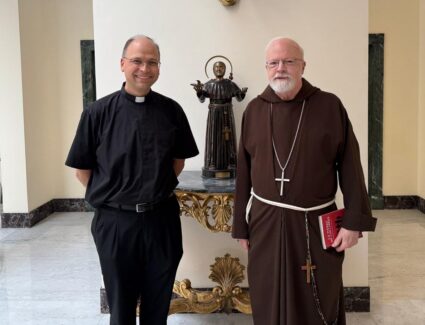
I also had lunch with the Vicar General of Opus Dei, Father Javier del Castillo. For a while, he was in charge of Opus Dei in the United States, but he is Vicar General of the prelature.
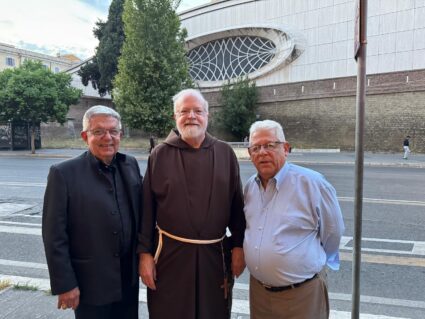
I also saw old friends at the Pallium Mass and the consistory, like Cardinal Adalberto Martínez, Mario Paredes, and Brother Diogo — who was at Sacred Heart in Washington and is now stationed in Rome.
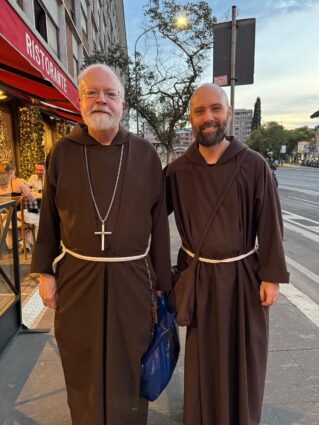
During the consistory, a number of the cardinals stayed at Casa Santa Marta, including Cardinal John Ribat, the cardinal from from Port Moresby in Papua New Guinea.
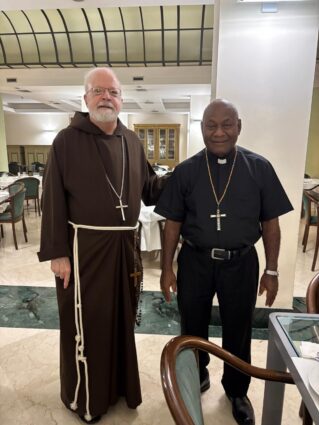 In my Capuchin province, we have 50 friars from my province in Papua New Guinea, and some of them are in his diocese at Port Moresby, so he knows all the Capuchins very well. So, it was great to see him.
Finally, as regular readers know, as a young friar, I fully expected my life’s work to take me to the missions on Easter Island. But, right before my ordination, Cardinal O’Boyle insisted that I stay because he needed Spanish-speaking priests in Washington. That providential decision by the cardinal began what I always call the “honeymoon” of my priesthood, those early years ministering to the growing community of Latin American immigrants arriving there.
An important part of that time in my life was The Catholic University of America. And, over the last 60 years, I have been involved with the university in nearly every capacity you can think of — as a student, professor, member of the Board of Trustees, and even Chairman of the Board.
So, I was deeply humbled when the university established the Cardinal Seán P. O’Malley Endowed Chair for Hispanic Ministry and Evangelization. To have a chair that reflects those early years of my priesthood, while also addressing the need to prepare pastoral leaders to serve our Hispanic Catholics, is an immense honor.
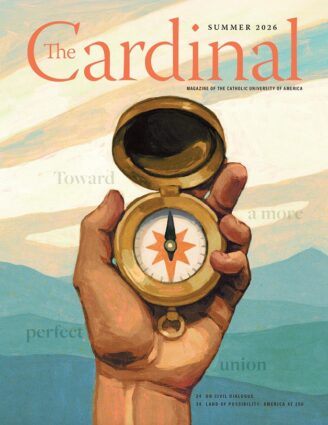
Recently, CUA’s magazine, The Cardinal, published an interview with me in which I had the opportunity to reflect on those early years of my ministry, and the importance of forming those leaders we need to serve our Hispanic communities. I would like to invite you to read the full interview on page 77 of the PDF here.
Until next time,
Cardinal Seán