Hello and welcome!
This month, I was asked to celebrate priestly ordinations for two different provinces of our Capuchin order. The first of these took place on Saturday, May 2, when I traveled to San Antonio, Texas, for the ordination of Brother Collin Mary Brown.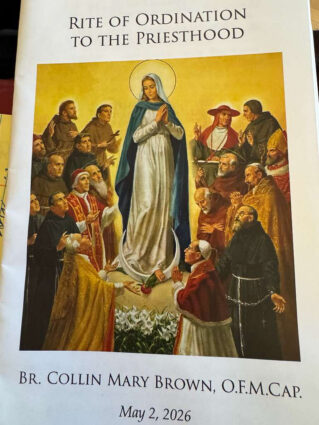
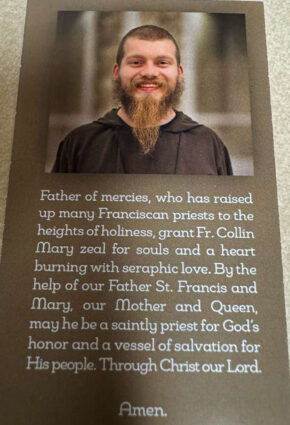
Brother Collin belongs to our St. Conrad Province, and his ordination was held at St. Matthew’s Church, a parish near our monastery in San Antonio.
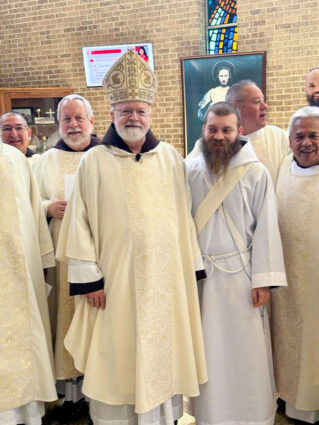
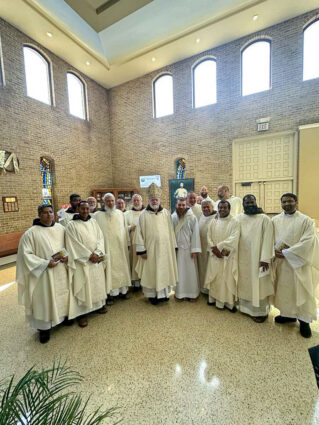
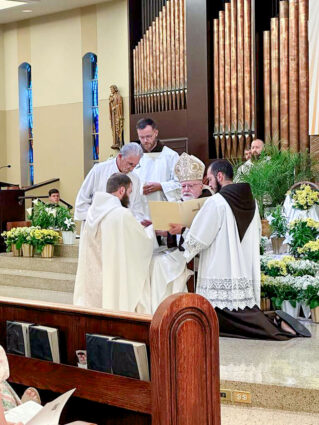
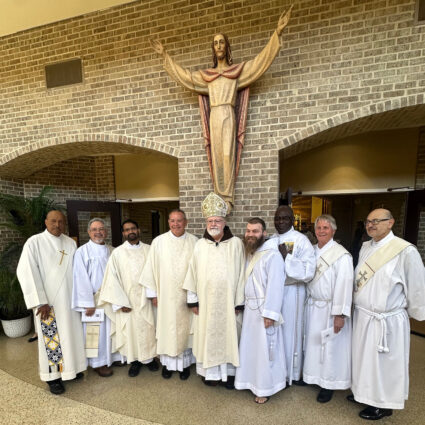
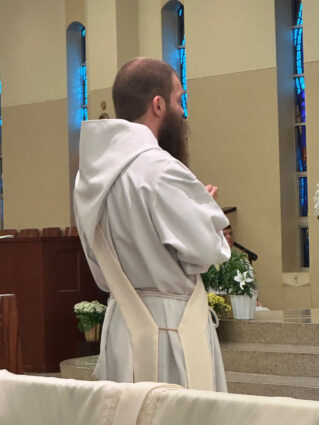
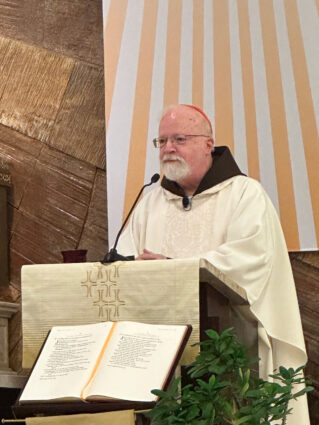
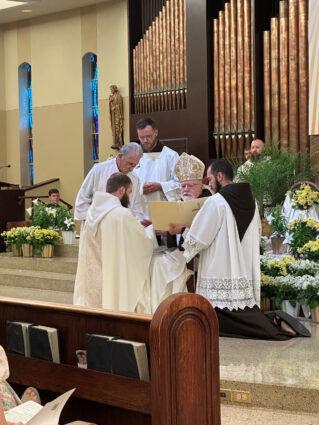
Because Brother Collin studied here in Washington at Capuchin College, I knew him very well, and many members of his province were able to come out for the celebration. Of course, that province used to be part of the St. Augustine Province, so I know all of their friars very well, and I was delighted to be invited to have the ordination there.
Then, this past Saturday, May 30, I celebrated the ordination of Brother Brian Sullivan. Brother Brian belongs to the Sacred Stigmata Province of Capuchins. He is the nephew of Bishop Joseph Sullivan, who was the auxiliary bishop of Brooklyn and a very good friend of mine. Bishop Sullivan was deeply involved with Catholic Charities and Hispanic ministry back in the 70s.
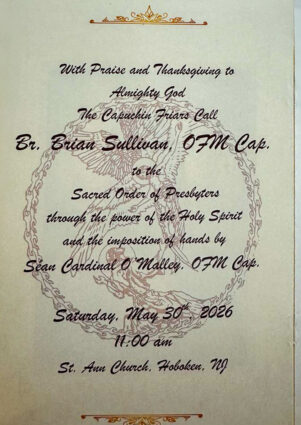
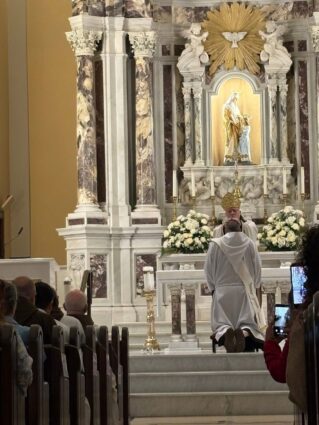
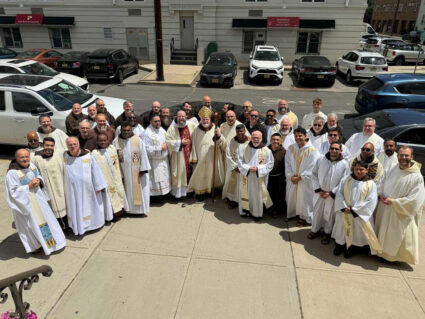
The ordination was held at St. Ann’s in Hoboken, which is a big, historic Italian parish that the Capuchins run.
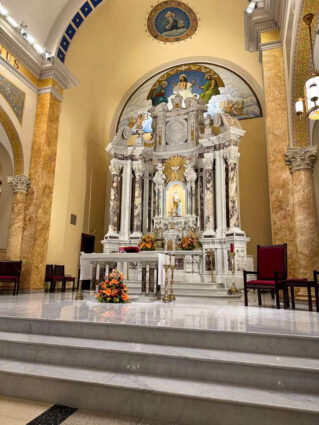
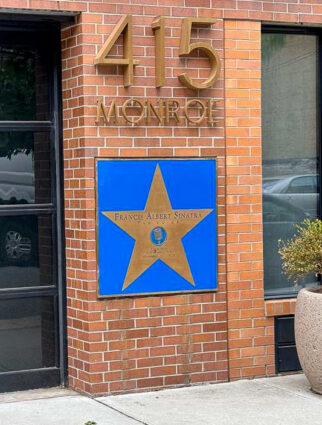
It is also famous for being the home parish of Frank Sinatra, who was baptized and confirmed in that very church. I was there last summer for the feast of St. Ann, and so I was very happy to be back this week for a priestly ordination.
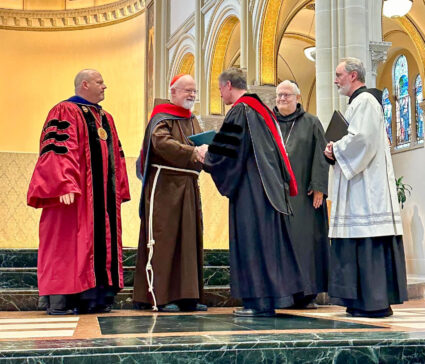
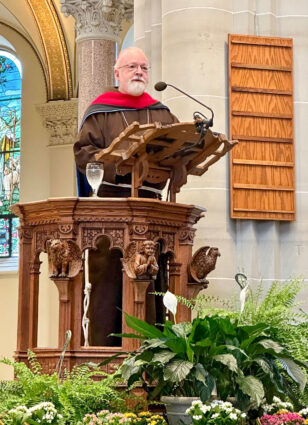
On Friday, May 8, I traveled to Latrobe, Pennsylvania, to give the commencement speech at St. Vincent Seminary, where they also honored me with a doctorate in theology.
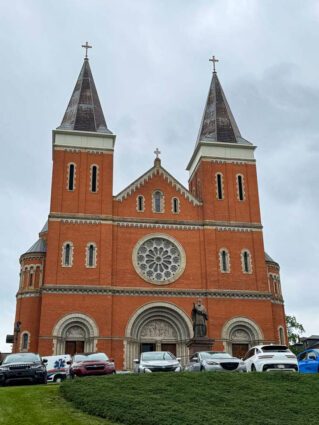
Latrobe is home to the Benedictine Archabbey, which was the first Benedictine monastery in the United States, and from there many other monasteries and priories were founded.
The abbot who founded it was from Bavaria, and his name was Boniface Wimmer. When the Capuchins came from Bavaria because of the Kulturkampf — which was a persecution of the Church— he was the one who got our friars situated in Pittsburgh at St. Augustine’s parish, and he was very helpful to those first Capuchins.
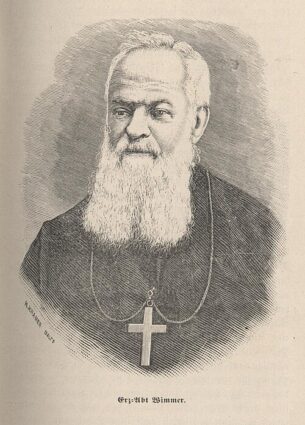
I always say he was like the German pope for the United States. When so many religious orders came to the U.S. during that time, they would almost invariably go to Archabbot Wimmer asking for help.
Most people don’t realize that the largest European ethnic group in the United States are the Germans, and in the 19th century, German was probably the second language in the country. Of course, we have the example of poor Blessed Solanus Casey, who went to the seminary in Milwaukee and was thrown out because he didn’t speak German. So he went to the Capuchins, and all their classes were also German. They didn’t throw him out, but they never gave him permission to preach or hear confessions!
St. Vincent is a wonderful place. They have a college and a seminary there, and I think it might still be the largest Benedictine community in the United States. The graduation took place during a beautiful Vespers ceremony in the abbey’s gorgeous chapel. The Bishop of Greensburg, Larry Kulick, presided at the ceremony, and I was glad to be joined by him, Archabbot Martin de Porres Bartel, and the rector of the seminary, Father Edward Mazich.
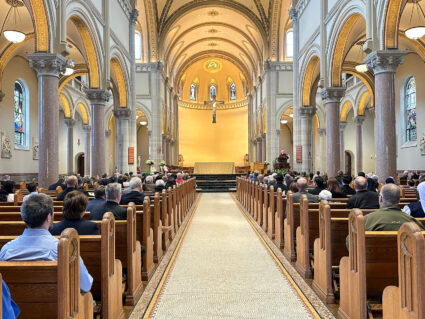
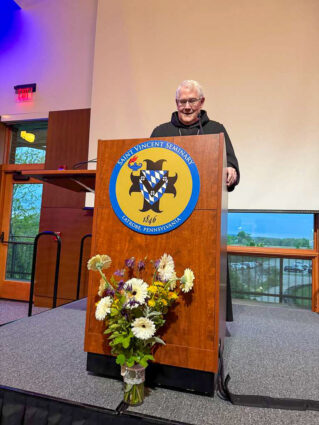
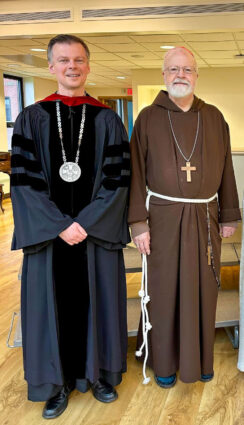
The graduation was for the seminarians and all of those studying for different degrees in theology and ministry. They have a lot of lay ministers, deacons, and seminarians from eight dioceses and three different Benedictine abbeys who study there.
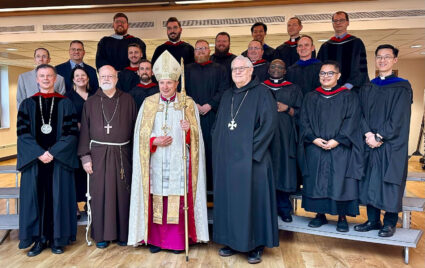
At the banquet, we had a fun bit of history come up. In my province, there’s a hymn to the Blessed Mother that we always sing in Latin and German called the Ultima. The monks at St. Vincent also sing the Ultima, but they have a different tune. So, we started the meal singing it the Capuchin way, and then at the end of the meal, we sang it the Benedictine way. We had our little rivalry!
It’s funny because when I was a young friar, I always thought that this was a Capuchin hymn, and I’ve come to understand that this is really a Bavarian hymn. So, a lot of different religious orders sing it, and certainly, they’re one of the Bavarian orders that do.
As I say, I was delighted to go back to St. Vincent’s after so many years. I hadn’t been there for decades, and we have this historic connection.
My next trip took me down to Florida, where I was invited to give a retreat for the Spanish-speaking priests of Miami, which happily coincided with Archbishop Thomas Wenski’s 50th anniversary of priestly ordination on May 15.
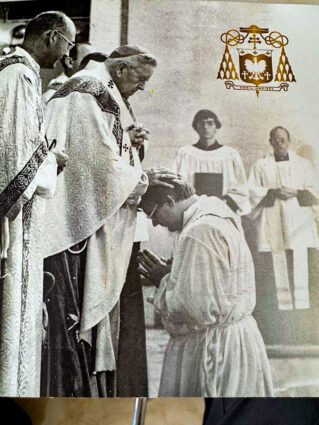
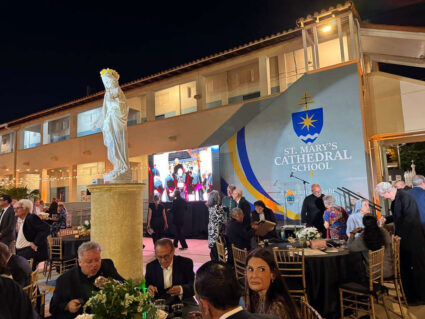
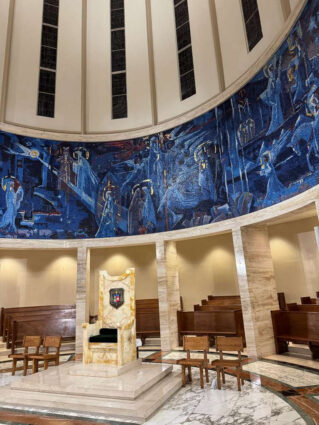
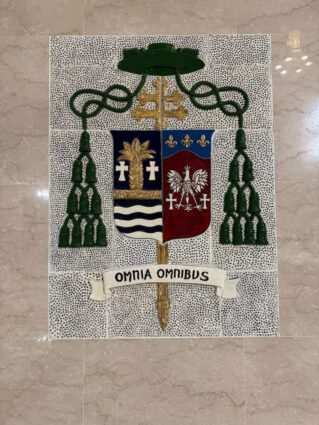
I was able to attend that wonderful celebration at the Cathedral of St. Mary, where, of course, the Archbishop preached. There were a number of bishops from Haiti and Cuba who attended the Mass. Archbishop Wenski has been very much involved with Haiti and Cuba over the years. And, in fact, his ministry as a priest was principally with Haitian immigrants, so it was a beautiful milestone.
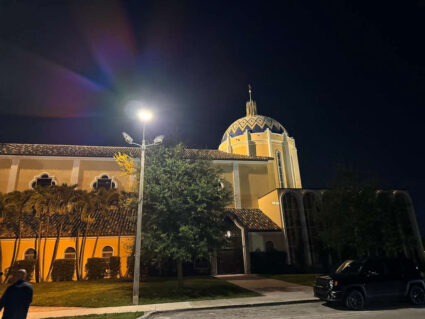
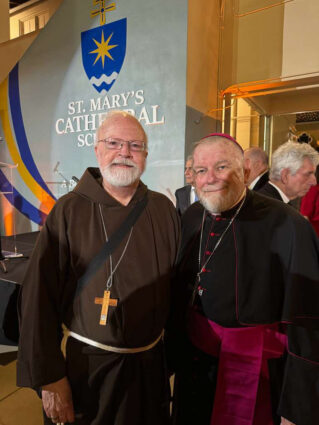
I’ve been teasing Archbishop Wenski lately because he’s grown a beard. I told him he should become a Capuchin now, but he has been resisting!
While I was in Miami, I also had an opportunity to visit with Father José Somoza. Father José is a 91-year-old Cuban Franciscan who is now living in Miami with his nephew and family.
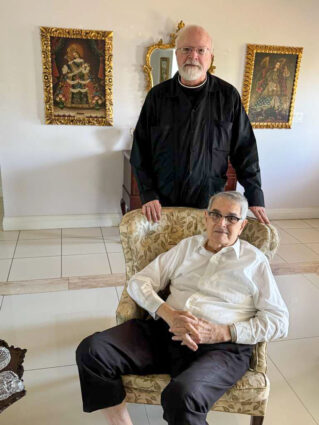
When I was ordained, he was returning from his studies in Belgium and was not able to return to Cuba. So, he came to Washington and worked with us in Hispanic Ministry. In fact, he was present at my very first public Mass that I celebrated back in 1970, which was for the feast of Our Lady of Charity, the patroness of Cuba, at St. Matthew’s Cathedral.
As part of his work in Washington, he was actually the founder of the bilingual education program for the public school system. Though he is retired, he is still available for confessions and spiritual direction for the Hispanic people from St. Timothy’s, the church where he worked for a long time.
Then, from May 18 to 22, I preached the Spanish-language retreat for the priests of the Archdiocese of Miami. The retreat was held in my old diocese of Palm Beach, at the Passionist Retreat House, Our Lady of Florida. The archdiocese hosts English retreats for their priests, but they always have one retreat in Spanish, and I was so happy to be able to give it this year.
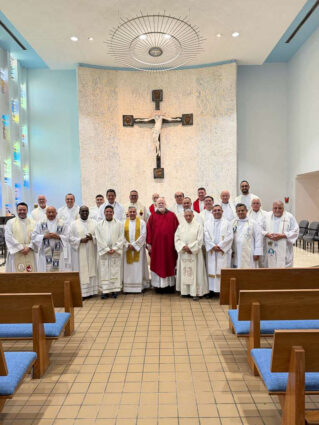
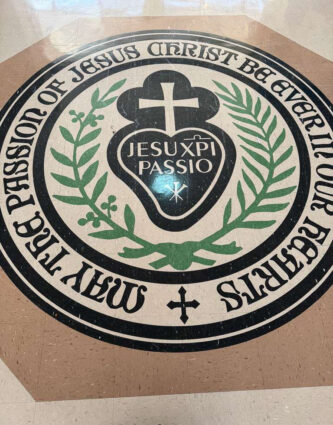
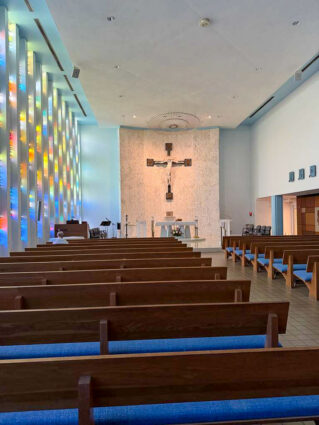
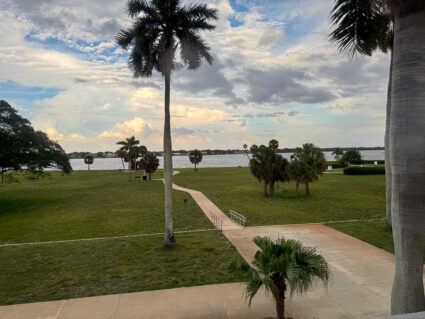
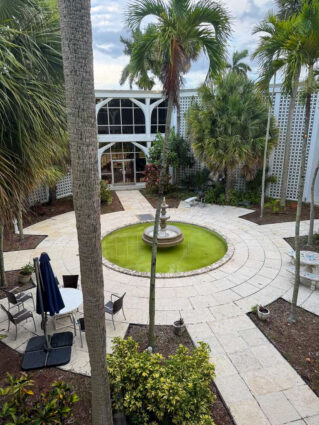
It was a lovely week with them. I was surprised to see that some of the priests there had actually been in the seminary in Havana when I was the apostolic visitator there 30 years ago!
Back in Boston, I had a meeting with Archbishop Arturo González, the President of the Cuban Catholic Bishops’ Conference, who was visiting the area to give a talk at St. Peter’s Parish in Cambridge.
Joining us for the meeting were Consuelo Isaacson, Micho Spring, and Sissi Rodriguez, who are part of the organization called the Friends of Caritas Cubana. This wonderful organization raises money to help the Catholic Charities programs in the diocese of Cuba. As many of you know, the crisis in Cuba right now is very, very great. So, I’ve been participating in a number of meetings to try to facilitate getting food and medicines into the country, so this was one of those. It was wonderful to have Archbishop Arturo with us.
This month, there have been several pieces of news from Rome that I don’t want to fail to mention.
First of all, I am so grateful for the Holy Father’s new encyclical, “Magnifica humanitas” (“Magnificent Humanity”).
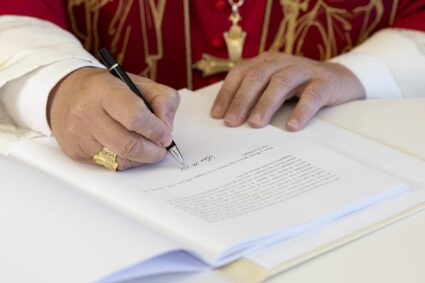
I think the topic has generated such great interest that it has introduced many people, both inside and outside the Church, to the Church’s social gospel. I thought it was ingenious how they began the encyclical with that sort of resume of what the Church’s involvement in social doctrine has been.
Certainly, AI is something that is on everyone’s mind, and it’s good to see how much attention the encyclical has gotten in the secular media. This is a topic that people realize is going to be so important in their lives, and they are truly interested in what the Church has to say.
I also want to say a word about the appointment of Montserrat Alvarado as the new Prefect for the Dicastery for Communication. To have a young lay woman in that position is a very historic thing.
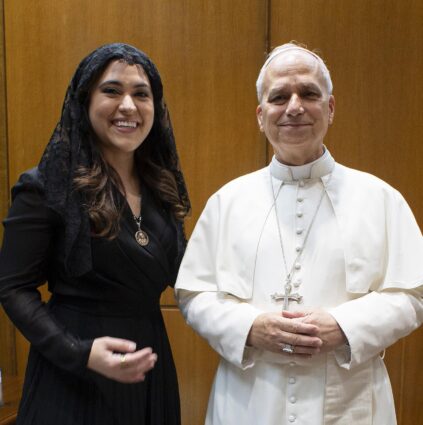
She has been running the communications for EWTN, and she certainly has great capacity. She’s also been very much involved in religious liberty and has great organizational skills that will put her in good stead as she takes charge of the worldwide communications effort of the Holy See. I’m very hopeful that she’s going to bring a lot of energy to her new role. And I am also grateful to have someone who is so conversant with both the English and Spanish-speaking worlds of communications, which is so important for the global Church.
I think a lot of people were probably very surprised by this appointment, but I think it was a very good choice. I have great hopes and expectations for what Montse will be able to accomplish in that role.
Finally, I also want to take a moment to congratulate Father Emilio Biosca, whom the Holy Father recently named Bishop-elect of Venice, Florida. We look forward to his upcoming ordination this summer!
Until next time,
Cardinal Seán